Category Archives: Uncategorized

Alice in Wonderland collection comes to Homerton Library

homlib's avatarHomerton College Library weblog

Selection of Alice in Wonderland coversThanks to a generous donation by Professor Maria Nikolajeva, we now have over 150 versions of Lewis Carroll’s Alice’s Adventures in Wonderland in the Children’s Literature Collection. Many of these are foreign language editions, including Russian, Spanish, Croatian and Hebrew, as well as over 50 different English editions. The selection of covers above shows just a little of the range of languages and illustration styles on display in the collection.

Selection of Alice in Wonderland books in the Rare Books Collection Selection of Alice in Wonderland books in the Rare Books Collection

We have decided that some of the older and more valuable books in the collection would be best housed in the rare books collection. You can see a selection of these in the photo on the right. Any items which are in the rare books collection will be marked with a location of ‘Stack (Ask at desk)’ in the catalogue. Just speak to a member of staff and we…

View original post 99 more words

Leave a comment

Filed under Uncategorized

Happy #Alice150! Lewis Carroll in 2015

... hopefully not late!

Royal Mail White Rabbit Stamp

In 2015 we celebrate the 150th anniversary of the publication of Alice’s Adventures in Wonderland (1865) — a remarkable book that has enchanted innumerable readers all over the world ever since its publication. Many institutions have dedicated their year to Alice, such as the Royal Mail, that commemorates the anniversary with a set of stamps, or Macmillan, Alice’s original publisher, with a bright and colourful new edition of the book. Later in the year Oxford will be celebrating this particular part of its literary heritage on Alice’s Day (on the 4th of July – watch this space!). But especially also for researchers working on Carroll, this will be an exciting year, because, if not now, when would be a better time to show off the many difference faces and facets of Alice? I will be presenting several aspects of my work on Carroll and Victorian Science (amongst others!) on various occasions throughout the year – so if you are interested, do come along! Titles and dates of my talks are as follows (click here for details on locations)

  • “What has Alice in Wonderland got to do with Cognitive Sciences?” (3 February, TORCH, Oxford)
  • “Victorian Fantastic Literature and the Psychological Sciences: Lewis Carroll and George MacDonald – Two Case Studies” (6 March 2015, English Faculty, Oxford)
  • “’We’re all mad here’: Lunacy, Lewis Carroll and Victorian Psychiatry” (April 2015, University of Liverpool)
  • ‘Alice and Fashion – Panel  Discussion’ (9 May, V&A Museum for Childhood, London)
  • ‘Pictures and Conversations’ (4 July, Alice’s Day, Oxford)
  • “Alice through the Magnifying-Glass: Lewis Carroll and the Victorian Sciences of the Mind” (15-17 September, Homerton College, Cambridge)
  • “Lewis Carroll & Victorian Children’s Literature” (8 November, Surrey History Centre, Woking)

I will also be involved in a number of other exciting projects this year, so watch this space, and follow me and #Alice150 on twitter!

Leave a comment

Filed under Uncategorized

Literature and Science Research Seminar Series, Hilary Term

I will be giving a talk at the Literature and Science Research Seminar Series alongside many other fantastic speakers this term – do come along!

williamabberley's avatarLiterature and Science, Oxford

Four literature and science research seminars are scheduled for this term. All will take place at 2pm on Fridays at the English Faculty, Seminar Room A. See below.

6 Feb. (3rd week): Graduate Forum: Laura Ludtke (St Anne’s), ‘Interwar London in an Artificial Light,’ and Natasha Ryan (St Anne’s)(title TBC).

20 Feb. (5th week): Dr Natalia Cecire (Sussex) (title TBC).

6 March (7th week): Graduate Forum: Anja A. Drautzburg (Queen’s), ‘What’s Borderline Personality Disorder Anyway? – Perceptual Frameworks in Joe Penhall’s Psychotherapy Play Blue/Orange’; and Franziska Kohlt (Brasenose) ‘Victorian Fantastic Literature and the Psychological Sciences: Lewis Carroll and George MacDonald – Two Case Studies.’

20 March (9th week): Dr Charlotte Sleigh (Kent), ‘Engineering fiction: literature and science in interwar Britain.’

View original post

Leave a comment

Filed under Uncategorized

Call for Papers: Working with Nineteenth-Century Medical and Health Periodicals

This might be interesting to people working in History of Science and History of Medicine

Alyson Slade's avatarDiseases of Modern Life

Working with Nineteenth-Century Medical and Health Periodicals
St Anne’s College, Oxford, Saturday 30 May 2015

The nineteenth century saw an explosion in the number of medical periodicals available to the interested reader. Publications such as the Lancet and British Medical Journal are familiar names to many of us, still published and widely read today. The period also saw a huge range of smaller journals appearing, as practitioners increasingly organised themselves into more discrete medical ‘specialisms’ towards the end of the century. The Asylum Journal, later Journal of Mental Science, for example, sought to bring together the knowledge of those working in the expanding field of psychiatry, whilst The Homoeopathic World provided a forum for discussion for those practicing homoeopathic medicine, and was read both by medical professionals and laypeople.

As digitization projects advance, an increasing number of these medical periodicals are becoming available to researchers. We are interested in…

View original post 189 more words

Leave a comment

Filed under Uncategorized

A Scientific Guide to Seeing Fairies. A fragment.

“A scientific guide to seeing fairies” – a blog I wrote for REMEDIA network. Perfect if you always wanted to know where in my research on 19th ct science and literature the fairies come in!

remedianetwork's avatarREMEDIA

By Franziska Kohlt

And it is only when “in fairy-fiction drest” that Romance gives admission to “truths severe.”

Edward Bulwer-Lytton, A Strange Story

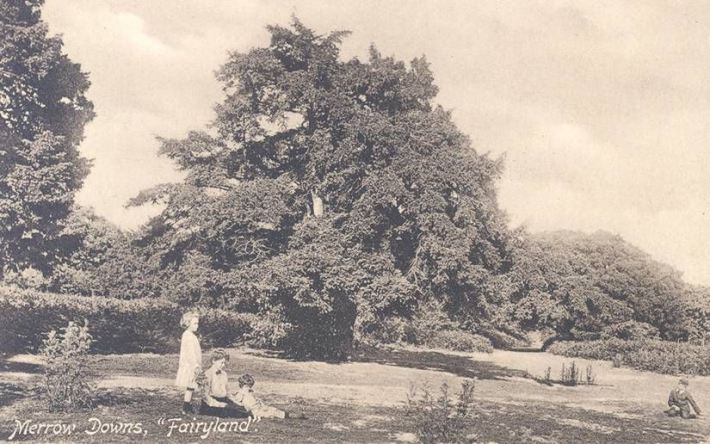
kohlt 1On a hot July day in 1872, Lewis Carroll, together with his friend the Pre-Raphaelite painter and illustrator Arthur Hughes, took ‘a splendid walk to Fairyland.’[i] The mysteriously named woodland area near Guildford in Surrey was popular with Victorian artists and writers – not least because of alleged appearances of a spectral lady and a pursuing phantom horseman near the lake “Silent Pool” at the heart of the forest (which is, even today, still listed as one of Britain’s most haunted locations). According to Carroll himself, encountering fairies or other fantastic appearances on such walks was quite a straightforward matter, one just had to follow three simple rules:

The first rule is, that it must be a very hot day—that we may consider as settled: and…

View original post 2,978 more words

Leave a comment

Filed under Uncategorized

Alice’s Day, Oxford, 5th of July 2014

Image

Alice’s Day, Oxford, 5th of July 2014

In only a little bit more than a week this year’s Alice’s Day is upon us! This year, the them  of this amazing Oxford-wide event is “Underground”, because it marks the 150th anniversary of the original manuscript of Alice’s Adventures in Wonderland — “Alice’s Adventures Under Ground”. Building up the the 150th of the novel’s publication next year, fantastic underground themed events will be taking place all around Oxford, and secret underground locations will be open to the general public for talks, storytelling and many other amazing things. In the Bodleian Library there will be a display of rare Alice editions, and other “underground” themed treasures from their collections, including George MacDonald’s The Princess and the Goblin and some of Tolkien’s very own illustrations of his Hobbit. You can view the entire day’s programme on the website of Oxford’s Story Museum.

My talk at Alice's Day 2013

My talk at Alice’s Day 2013

The Lewis Carroll Society have once again put together a splendid set of

talks to accompany the day, and in three subsequent presentations at the Old Fire Station Sarah Stanfield, Chairwoman of the society, will explore the history of the manuscript, Angela Trend will gives further insight into Alice’s life after Alice’s Adventures and I will myself dive down the Rabbit Hole to introduce the transformation of the magical underground journeys in the history of (children’s) literature, before Mark Richards, former Chairman of the society will round off the evening with a presentation on Alice’s journey through the ages, and her transformation in the novel’s illustrations, followed by a panel discussion. All attendees will receive a free copy of this year’s special edition Alice newspaper “Frabjous Times” – so do make sure you come along to have a fantastic day!

Image

Talks by the Lewis Carroll Society


Leave a comment

Filed under Uncategorized

George MacDonald’s Scotland

While almost everybody on the academic home shores of Oxford was following the Summer VIIIs last week , I ventured to far-away Scotland to retrace the footsteps of Aberdeenshire author George MacDonald (1824-1905), subject of my current thesis chapter.

Huntly, Aberdeenshire

George MacDonald's birth place

George MacDonald’s birth place

I began my journey in Huntly, the birth place of the author, which seems very quietly, but charmingly haunted by the presence of the author. While a small almost unnoticeable plaque over the bright sign of a dental practice points out the place of the author’s birth, no statue commemorates the town’s son. However, it is his words that greet the visitor – “Welcome to Huntly – Room to Roam” – a quote from his first major work of literary fantasy, Phantastes (1858), which, many argued crucially influenced his close friend Lewis Carroll’s Alice’s Adventures in Wonderland  (1865) (some are sceptical, but both dreamers definitely follow a white rabbit at an early stage of their journey).

Thou goest thine, and I go mine
Many ways we wend;
Many days, and many ways,
Ending in one end.

Many a wrong, and its curing song;
Many a road, and many an inn;
Room to roam, but only one home
For all the world to win.

The poem sung by the ideal woman, the novel’s protagonist is chasing, but who continuously escapes his grasp.

River Bogie in Huntly

River Bogie in Huntly

Huntly, or Milton of Strathbogie, as it was formerly known, is situated (you guessed it) at the river Bogie, whose lush green banks don’t leave much to the imagination, when one rethinks the journey through green woodlands, along a river which leads Anodos into Fairyland in the novel.
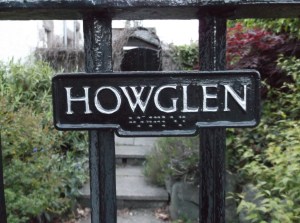
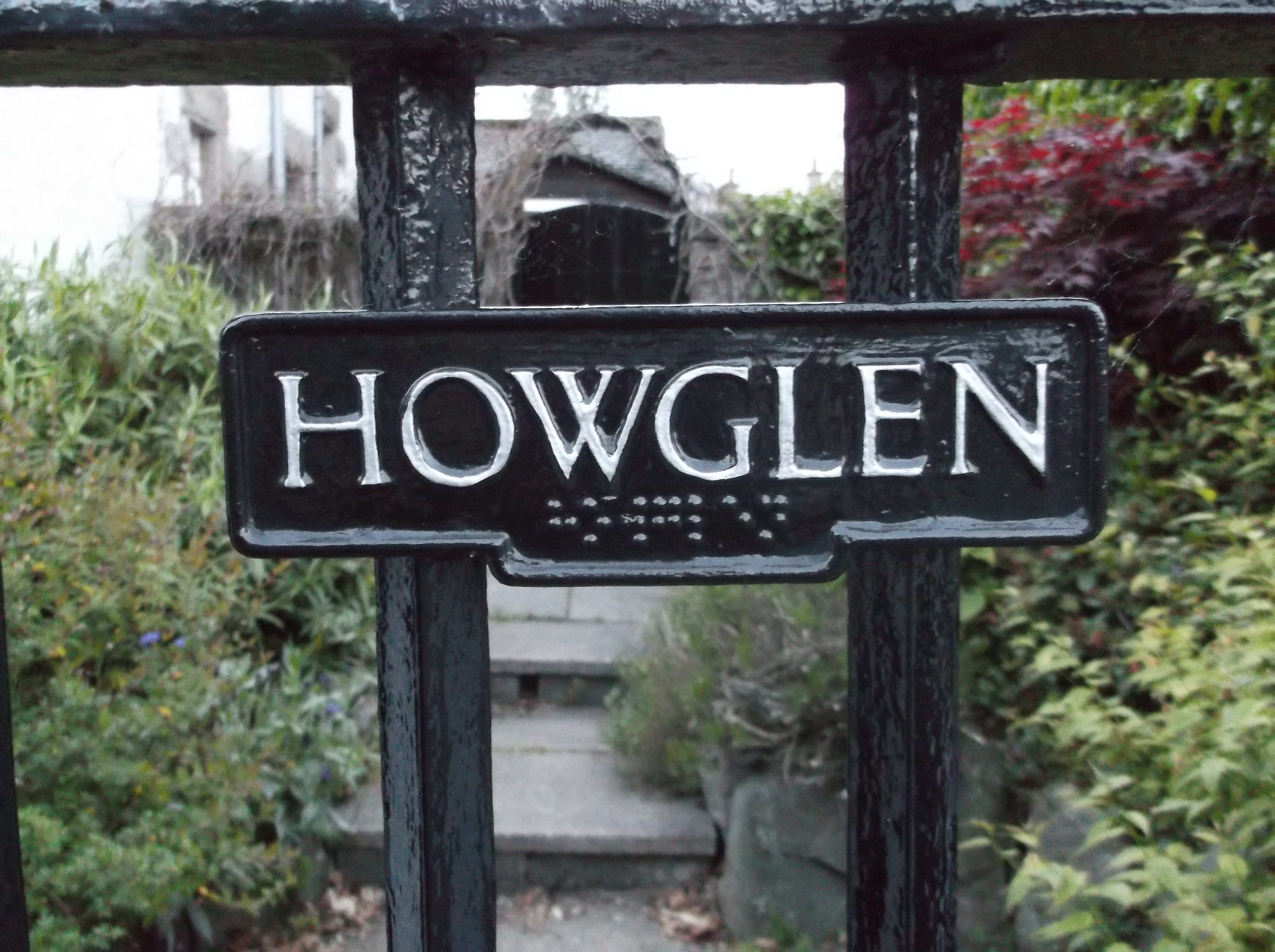
The House Howglen

The House Howglen

On the way back from the river one passes the house Howglen and recalls his later novel Alec Forbes of Howglen (1865). The house belonged to the Rev Robert Troup, whose daughter Sophie was blind, hence why the house’s name is also displayed in Braille.

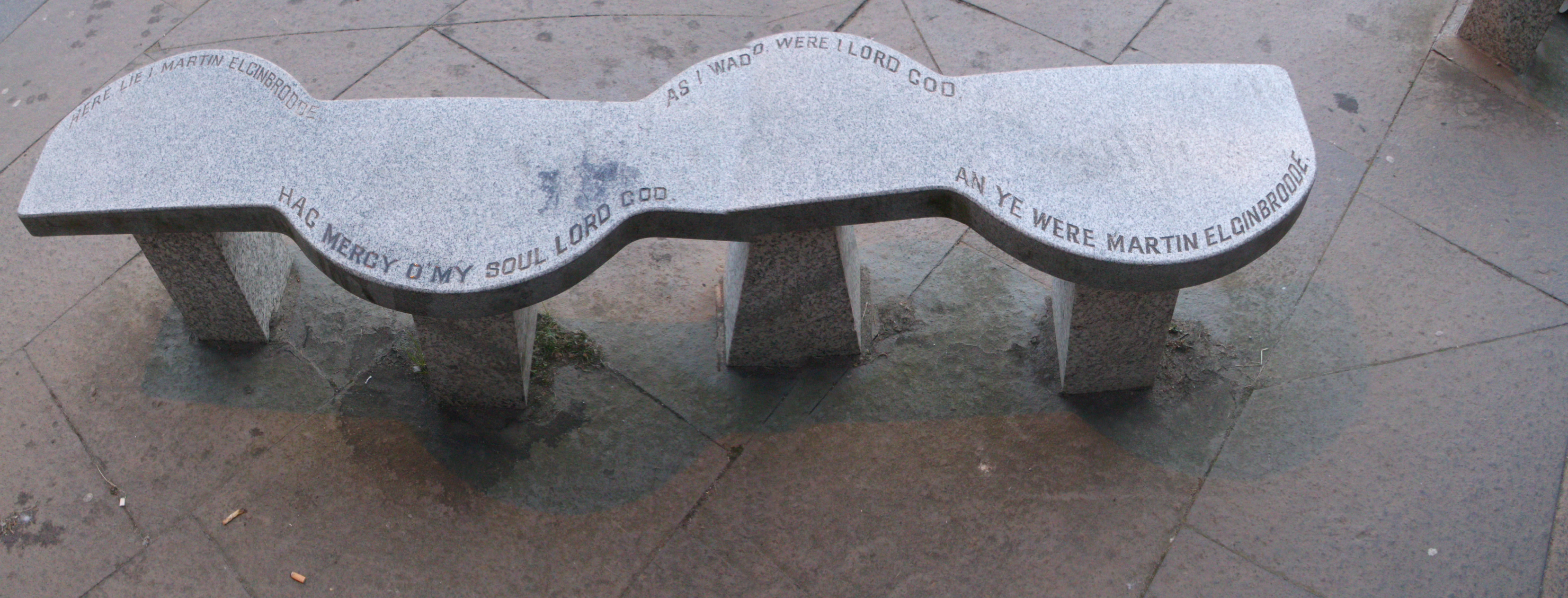
Back in the town square, the banks in front of Brander Library display the famous epitaph from David Elginbrod (1863).
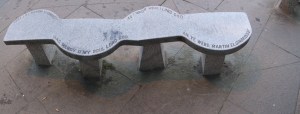
DSCF7426 Elginbrod1


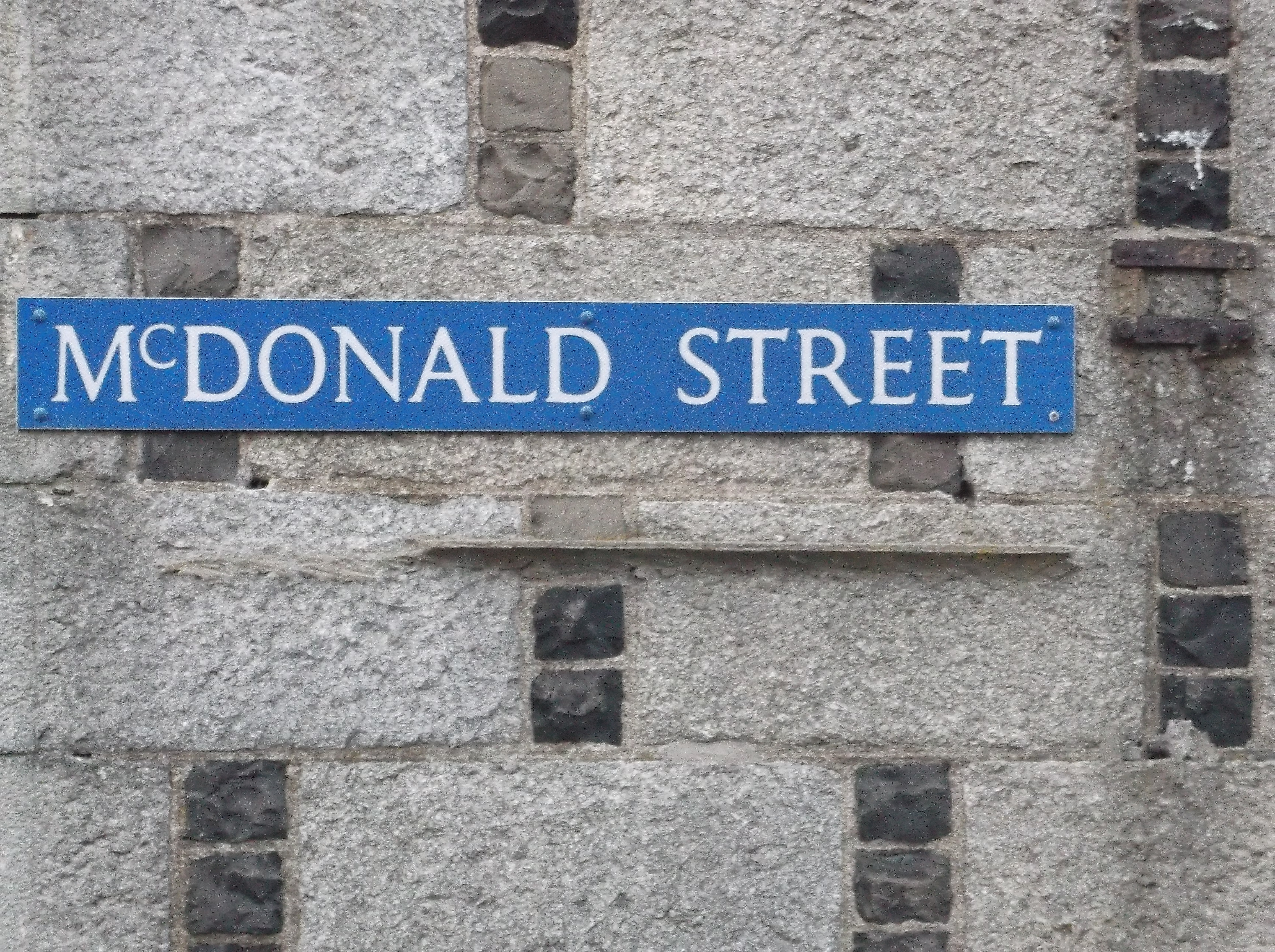
Overall, it was however sad to see that the MacDonald estate had been moved from the local library into various different archives, where it is now being kept in boxes. And despite the re-branding of Huntly, and the omnipresence of the “Room to Roam” slogan (on every single bin in town), even “MacDonald-Street” runs the risk of going unnoticed – or rather unassociated with the son of the family after which it is named, whose former school is just located at its end.
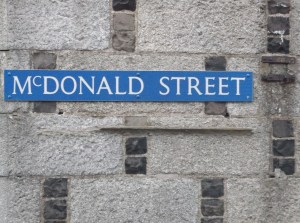
MacDonald Street

MacDonald Street


Aberdeen

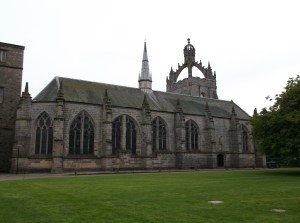
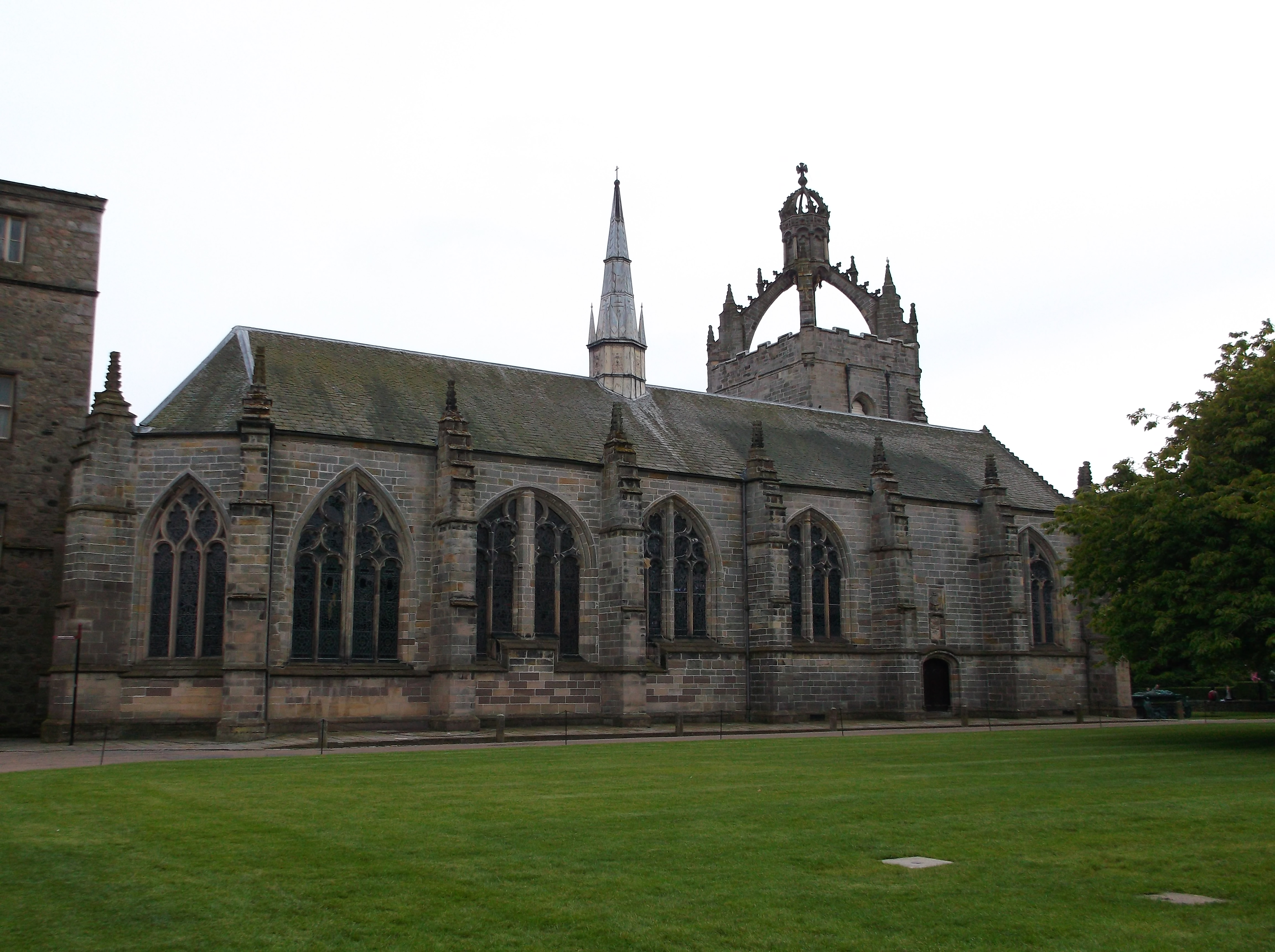
King's College, Aberdeen

King’s College, Aberdeen

MacDonald studied the sciences at King’s College Aberdeen, which was the main reason for my visit. From the local pub – the Gordon Arms – MacDonald would have taken the horse cab to depart to Aberdeen – possibly down what is now the A96 – I took the same route in a slightly faster cab.


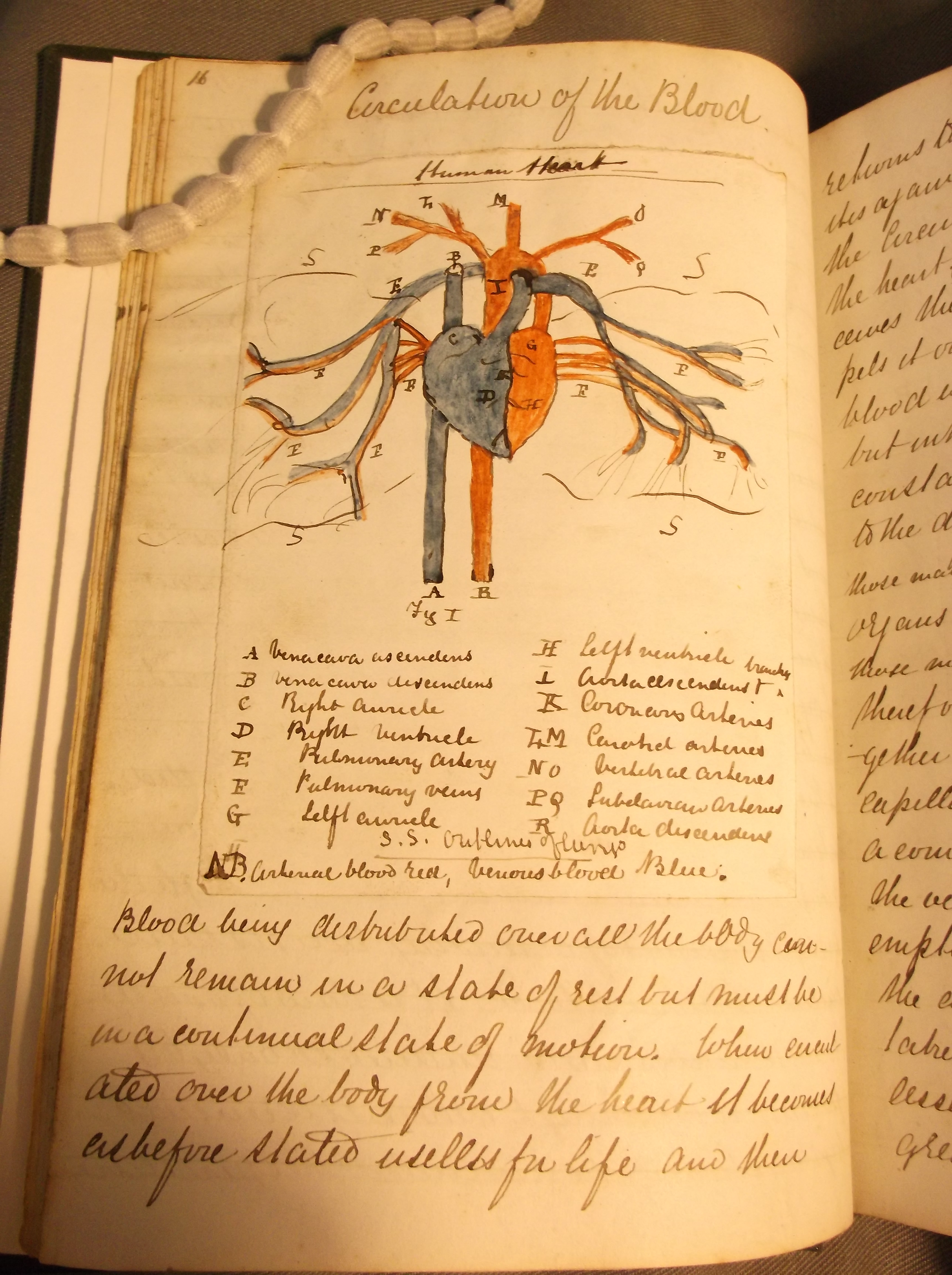
Lecture Notes in Physiology

Lecture Notes in Physiology

I learned that Aberdeen University Library looks a bit like a spaceship (from the inside), that the rest of Aberdeen is mainly made of Granite, which is a) cool and sparkly when sunny, but b) a bit too grey when not sunny.  I also learned that the two colleges (Marischal and King’s) were thriving centres for the study of the Natural Sciences and Medicine in MacDonald’s  student days, and the medical heritage of the University of Aberdeen (which was the result of merging the two colleges) is omnipresent in the old town. But mainly, I was amazed by how much more impressive the lecture notes of those courses looked, which were taken and archived for posterity by students, then anything I will ever hand down myself (or possibly not).  One of the note-taking students, whose name in the cover of the notebook was indicated as “A. Bain”At the Back of the Northwind, was in fact the philosopher and psychologist Alexander Bain, who went on to found the journal Mind.

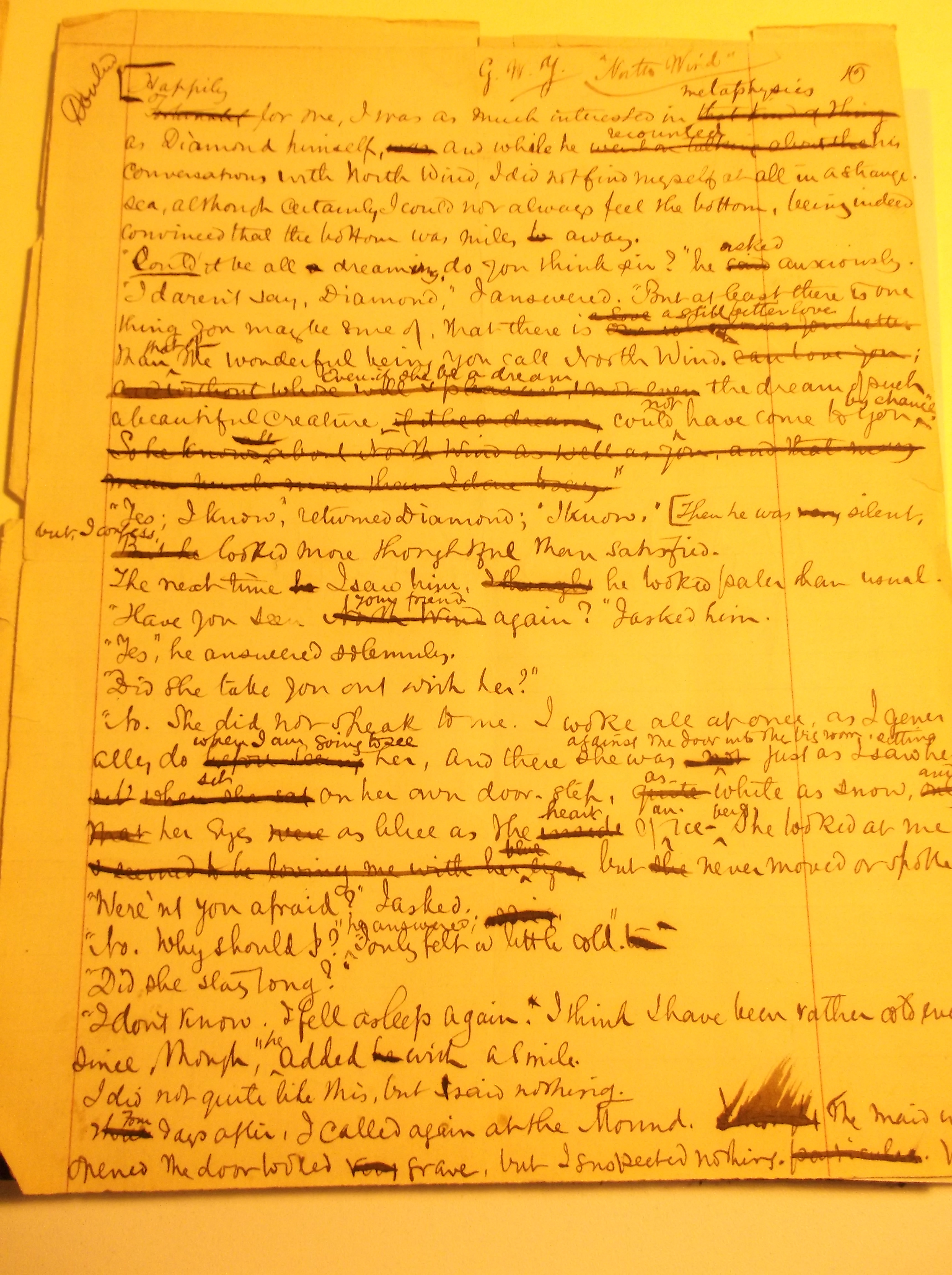
MacDonald’s handwriting was thankfully on the more legible end, and I got the chance to view his letters and manuscripts of, amongst others,  At the Back of the North Wind (1871) , the story of the sickly boy Diamond, who is taken on a fantastical journey by the beautiful North Wind.

Mintlaw & Oldmeldrum

Birthday Card, written by George MacDonald in 1860

Birthday Card, written by George MacDonald in 1860

The Aberdeenshire Museum and Library headquarters hold more of MacDonald’s manuscripts, including Within and Without (1855), The Princess and the Goblin (1872), that was first called “The little Princess and the Goblin”)  and David Elginbrod (1863) in which’ Herr von Funkelstein” was originally called ‘Count Halkan’. What is more, in addition to Oldmeldrum’s rare foreign language editions of his works, Mintlaw keep sketchbooks, photoalbums and, most amazingly, stage props from the Pilgrim’s Progress play the MacDonald family performed in.  Indeed, some sketches folded to 8 times their size turned out to be the sketches for the stage curtains for said performance, and will hopefully one day find their way out of archive shelves into display cabinets.

There and Back;  in Huntly

Anodos waking in Phantastes (1858)

Anodos waking in Phantastes (1858)

Returning to MacDonald’s hometown it is not hard to see the influences his Scottish home and university towns had upon his fiction. While I gained this insight, following the footsteps of MacDonald, David Elginbrod and Anodos, I also had the chance to admire the beautiful natural surroundings of the Scottish Highlands. In a strange way, MacDonald’s writings only seem to reveal their real nature when put back into the context of their place of creation. And if Scotland is currently not exactly on your doorsetp, I hope you enjoyed this blog, otherwise, go dust off that old mirror in your attic, or go to sleep. You never know where you’re going to wake up…

MacDonald's former school, and the path leading to MacDonald Street
MacDonald’s former school, and the path leading to MacDonald Street

8 Comments

Filed under Uncategorized

CBC Radio documentary on Alice & Lewis Carroll !

I am talking about Alice, Dreams and Victorians, alongside wonderful Carrollians Edward Wakeling, Donald Rackin, Jenny Woolf and many more on the lovely 2-part CBC Ideas radio documentary “Curiouser and Curiouser” – part two is on tonight!

A Mad Tea Party

Click here to listen to the 2-part documentary online!

Leave a comment

April 29, 2014 · 9:46 am

Exhibition and Public Talk on Natural Mimicry at Oxford Natural History Museum, April-May 2014

Exciting display coming up in the University of Oxford’s Natural History Museum!

williamabberley's avatarLiterature and Science, Oxford

From the week beginning 28th of April and throughout May 2014, Oxford University Natural History Museum will be hosting a small exhibition on the history of natural mimicry and camouflage, curated by Dr Will Abberley.

‘Faking It: Victorian Natural History and the Science of Disguise’ will display books and papers from the museum archives relating to the Victorian naturalists Alfred Russel Wallace and Henry Walter Bates. There will also be eye-catching insect specimens from the museum’s Hope Collection which demonstrate natural mimicry and camouflage across the world.

Dr Abberley will be giving a table-top talk at the museum on all of the objects and the historical background to theories of natural mimicry on Sunday 11th May at 11.30AM. See page 5 of the museum spring/summer programme for more details.

The display will be found in the ‘Presenting’ case near the front entrance.

butterflies  leaf

View original post

Leave a comment

Filed under Uncategorized

CFP: The Wizard of Oz and the Western Cultural Imagination

Quick! This looks like a fantastic opportunity for all OZ scholars!

kargraham's avatarTelling Tales

I’m posting this here because their website doesn’t actually seem to be working, and the deadline is today. I was sent this by email last night, but I know that there will probably be interest from my fellow Oz scholars. As always, I’m slightly perturbed by the insinuation that there is little or no scholarship on something that I’ve been researching, writing and publishing on for four years now and for which I own numerous volumes of detailed scholarship, but I understand that this is the language one uses to both entice and justify. The only question left is, how on early do I narrow down 50% of my PhD topic into a 300 word abstract, and a 20 minute paper?

The Wizard of Oz and the Western Cultural Imagination: A Conference Celebrating and interrogating 75 years of the MGM Musical

Faculty of Arts, University of Brighton

November 21-22, 2014

DEADLINE 1st March, 2014

View original post 421 more words

Leave a comment

Filed under Uncategorized